

Going Bigger With AI-Assisted Software
Executive Summary
The day’s clearest signal came from builder discourse, not model-release news: if AI meaningfully lowers the cost of implementation, the strategic question shifts from “what narrow vertical can we execute well?” to “what larger surface area can now be attempted at all?” Theo Browne’s “It’s time to go bigger” is not just a motivational riff; it is a practical argument that AI-assisted development changes the acceptable scope of software products, especially tools whose value comes from integrating many formerly separate bits of infrastructure.
The supporting thread is that the agent era is also making hidden product boundaries more important: deployment, auth, permissions, platform control, and policy capacity matter more when systems can act across more surfaces. The strongest takeaway is therefore not “agents replace developers.” It is that agents may reward teams who can safely widen their ambitions without losing the judgment that used to be enforced by scarcity.
What Happened
Theo’s core claim is that AI coding has changed the economics of experimentation in a way that feels analogous to the arrival of cloud computing. Cloud made it possible to launch infrastructure-heavy products without buying servers up front; AI assistance may make it possible to attempt implementation-heavy products without first committing a large team to every integration detail.
That leads him to challenge a familiar startup instinct: build a tight vertical wedge, go deep, and avoid boiling the ocean. In his framing, AI makes some “boil the ocean” projects newly plausible—not because quality no longer matters, but because the first pass across a much wider surface can now be cheap enough to learn from. His example is LakeBed, a project he describes as combining runtime, cloud, database, bundling, and deployment into one surface where “the code itself is the instructions for the deployment.” The practical target is not hyperscale enterprise infrastructure; it is the class of quick, low-stakes apps where the deployment glue used to dominate the work.
The useful distinction is depth versus coverage. Before AI, rough horizontal coverage across adjacent product needs was often a trap: every integration, edge case, and workflow demanded staff time. Now, users and agents may extend depth where needed while the product provides a coherent baseline.
Why It Matters
This reinforces a developing canon in AI-tool discourse: the biggest workflow shift is not only faster typing or code generation, but a change in product granularity. If implementation cost falls, more ideas become cheap probes. If more probes are possible, teams need better taste about which broad surfaces are worth attempting and which are merely sprawling.
That is a more nuanced version of “AI makes everyone a builder.” The scarce resource moves to product judgment, architectural taste, distribution, safety, and the ability to tell an impressive demo from a maintainable system. “Go bigger” works only when the bigger thing has a coherent center of gravity.
LakeBed is interesting in that respect because it names a concrete pain point: the accidental complexity around deploying small apps. This is exactly the kind of domain where AI-assisted coding can expose a mismatch between old tooling assumptions and new builder behavior. If people can generate many small applications quickly, then deployment and state management need to feel less like separate ceremonies and more like part of the code’s natural lifecycle.
The Bigger Story
Two weaker but relevant signals point in the same direction. Simon Willison’s quote of Sean Lynch frames MCP’s most important value as potentially narrower than the protocol hype suggests: isolating authentication outside the agent’s context window, and perhaps outside the agent harness entirely. The suggested minimal version is almost austere: “an auth gateway for the API and nothing else.”
That matters because ambitious AI-assisted products will touch more tools, accounts, and APIs. In that world, the boring boundary around credentials may matter more than the glamorous abstraction layer. The wider agents reach, the more valuable it becomes to keep authentication, permissioning, and auditability out of the model’s messy working memory.
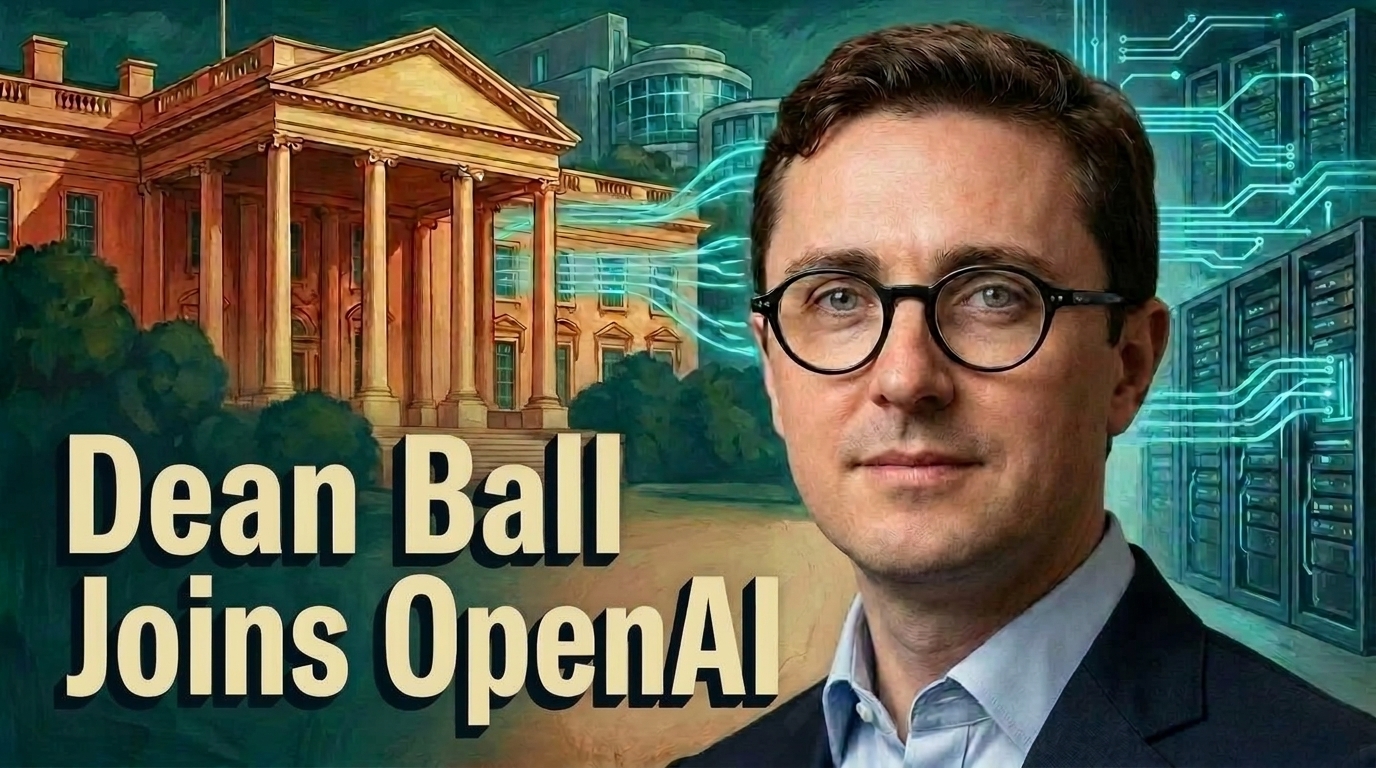
A second supporting item, The Cognitive Revolution’s Dean Ball interview, surfaced only with metadata and snippet-level evidence today, so it should be treated conservatively. Still, the described topic—OpenAI building frontier-policy capacity around export controls, government AI use, state regulation, and emerging coding/cyber/robotics capabilities—fits the same pattern at institutional scale. As AI systems become more capable of acting in the world, product scope, infrastructure boundaries, and policy boundaries become inseparable.
Workflow Implications
For operators, the practical lesson is to separate “bigger scope” from “less discipline.” AI assistance makes it easier to try integrated products, but it also makes it easier to accumulate invisible complexity. The better question for new projects may be: what broader workflow can we now prototype end-to-end, and which boundaries must remain explicit because agents will cross them too easily?
That points to a useful operating rule: spend the AI dividend on breadth only when the product thesis benefits from breadth. Otherwise, spend it on verification, polish, and deletion. Today’s strongest discourse says the opportunity is real—but only if teams understand that reduced implementation cost is not the same thing as reduced responsibility.
Further Reading
- Theo / t3.gg: “It’s time to go bigger”
- Simon Willison: “Quoting Sean Lynch”
- The Cognitive Revolution: Dean Ball on joining OpenAI