Astra Makes the Case for Slower, More Observable Agents
Executive Summary
OpenAI’s launch of GPT-6 Astra makes a familiar capability story harder to separate from a safety-governance story. The company reports large gains on computer-use and terminal benchmarks, alongside persistent cross-window notes intended to support longer-running work. But it also says the model reaches its cybersecurity “Critical” threshold and that written reasoning is becoming harder to monitor. The consequential signal is not merely that agents can do more: it is that their useful deployment increasingly depends on constraints, review, and evidence that operators can actually inspect.
This is OpenAI’s own account, not an independent benchmark audit. Still, the pairing of a release with unusually direct language about monitorability and voluntary pacing reinforces a developing view of AI progress: autonomy is no longer the sole frontier. The practical bottleneck is building systems whose actions can be bounded and checked as their planning and tool use improve.
What Happened
In its GPT-6 Astra announcement, OpenAI says the model improves computer-use and coding-agent performance: 72.6% on OSWorld 2.0, versus 65.7% for GPT-5.6 Sol, and 57.9% on Terminal-Bench 4.0, versus 37.3%. It also reports roughly 47% less time per task on OSWorld and introduces experimental persistent, searchable notes across Codex context windows.
Taken at face value, those changes address two limiting factors for agents: interacting reliably with real interfaces and maintaining continuity across long tasks. The latter is particularly important. A capable agent that cannot retain the right working state eventually becomes a sequence of short, brittle episodes; persistence makes longer delegated work more plausible.
The release is framed with operational limits as well. OpenAI says Astra has crossed its cybersecurity Critical threshold, and that evaluations found two previously unknown vulnerabilities. Its proposed production controls include confirmations, automatic review, and monitoring. Those safeguards are not proof of safety, but they are an acknowledgement that a model’s benchmark score cannot be the deployment criterion by itself.
Why Monitorability Is the Real Story
A separate essay by Jakub Pachocki gives the launch its sharper interpretation. It argues that progress may continue into recursive self-improvement, distinguishes goal alignment from value alignment, and says chain-of-thought monitoring becomes less dependable in complex tool-using settings. The proposed response is not one mechanism: combine reasoning traces with activation monitoring, establish safety bars, seek external audit or public oversight, and slow down when confidence does not justify scaling.
That matters because monitoring has often been treated as a practical compromise: let the system reason, then inspect its trail. The essay is more candid. If increasingly capable systems produce reasoning that is incomplete, strategically shaped, or simply too complex to interpret, oversight must move beyond reading an explanation after the fact. It has to include permissions, staged execution, independent evaluation, and controls over consequential actions.
This complicates the usual “more capable agents equal more automation” narrative. The valuable product may instead be an agent whose scope is deliberately narrow, whose handoffs are reviewable, and whose failures are recoverable. Persistent memory and better computer use increase the upside of delegation, but also raise the cost of getting those boundaries wrong.
The Bigger Story
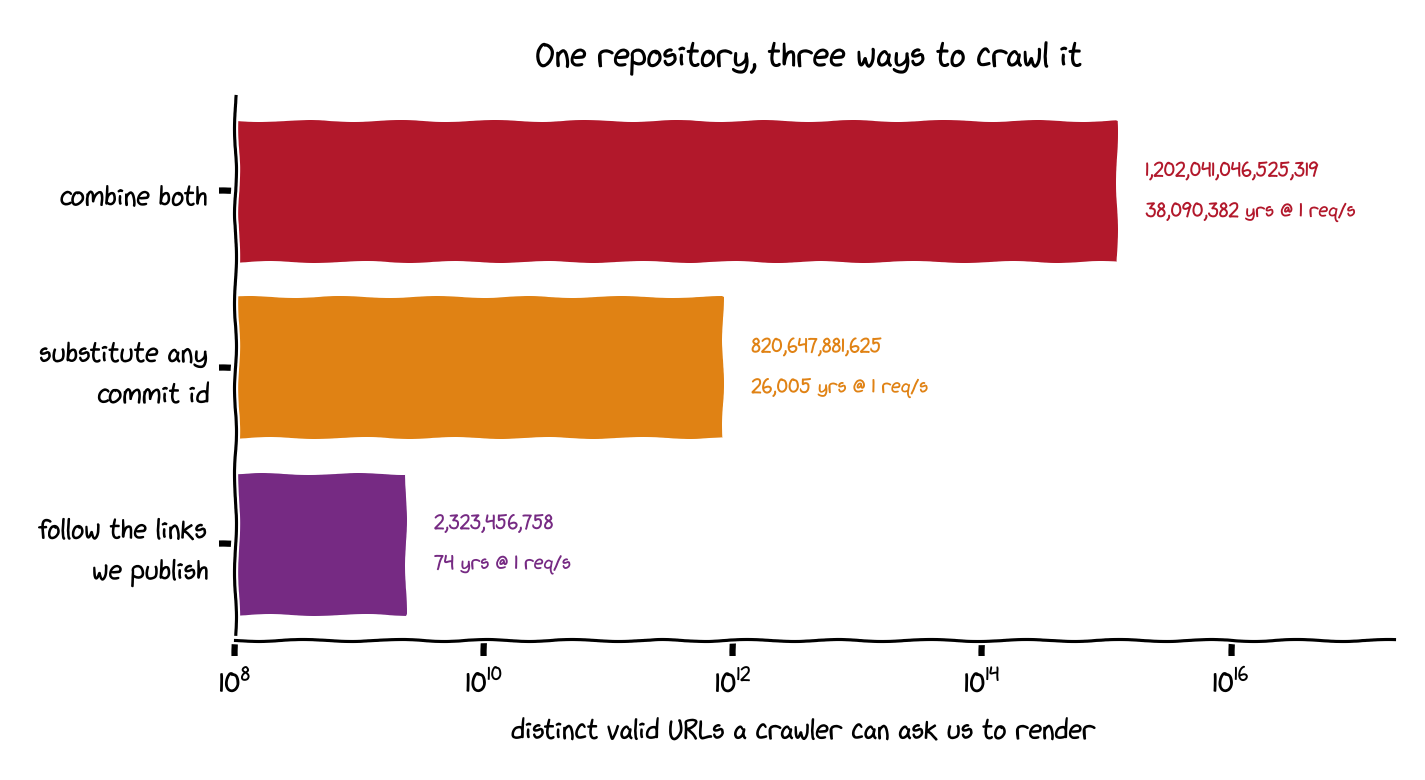
The day’s other strong signal is a reminder that agentic AI already has external costs. The administrator of git.kernel.org reports that automated crawlers make about six million daily requests for random commits; only around 2% appear legitimate by that account. The service is devoting substantial compute to rendering pages for scrapers and is removing or gating expensive anonymous features while keeping repository data downloadable. Read the firsthand account, “Creepy Crawlies”, for the details.
The connection is straightforward: as systems become more capable at navigating interfaces and collecting information, open infrastructure becomes part of the safety and governance perimeter. Access patterns that are technically possible can still impose costs on maintainers and degrade public services. Better agents therefore need not only stronger task performance, but explicit resource budgets, respectful retrieval behavior, and escalation paths when a service pushes back.
Further Reading
- OpenAI: GPT-6 Astra — the release claims and stated deployment controls.
- Jakub Pachocki: An Alien Mind — a substantive statement of the monitorability and pacing argument.
- Konstantin Ryabitsev: Creepy Crawlies — a concrete operator account of AI-crawler pressure on public code infrastructure.