


Jensen Huang Resigns as NVIDIA CEO
Executive Summary
- NVIDIA named CFO Colette Kress interim CEO after Jensen Huang resigned on November 12. The board is searching for a permanent successor and says customer commitments and the product roadmap will continue without interruption.
- ArtCraft is using AI to build open-source alternatives to major desktop applications. Its 17-app lineup includes PhotoCraft, but the project’s own figures show a substantial gap between feature breadth and professional readiness.
- Google launched Gemini 4 Hydrogen at $1.50 per million input tokens and $7.50 per million output tokens. That is only 25% cheaper than Carbon and Argon’s introductory rates; their December price rise changes the comparison.
NVIDIA Appoints Kress and Its First Board Chair
NVIDIA’s announcement says Huang resigned as president, CEO and board member, effective immediately, after 33 years leading the company. The statement does not give a reason for his departure.
Kress, NVIDIA’s CFO since September 2013, keeps that position while serving as interim CEO. The board will consider internal and external candidates for the permanent role. It also appointed Harvey C. Jones as NVIDIA’s first-ever board chair.
For AI infrastructure buyers, the company’s stated plan is continuity: the board explicitly says it expects operations, customer commitments and the technology roadmap to proceed without interruption. NVIDIA’s November 17 earnings call is the next scheduled opportunity for management to address the transition alongside its financial results.
ArtCraft’s Photoshop Alternative Separates Breadth From Readiness
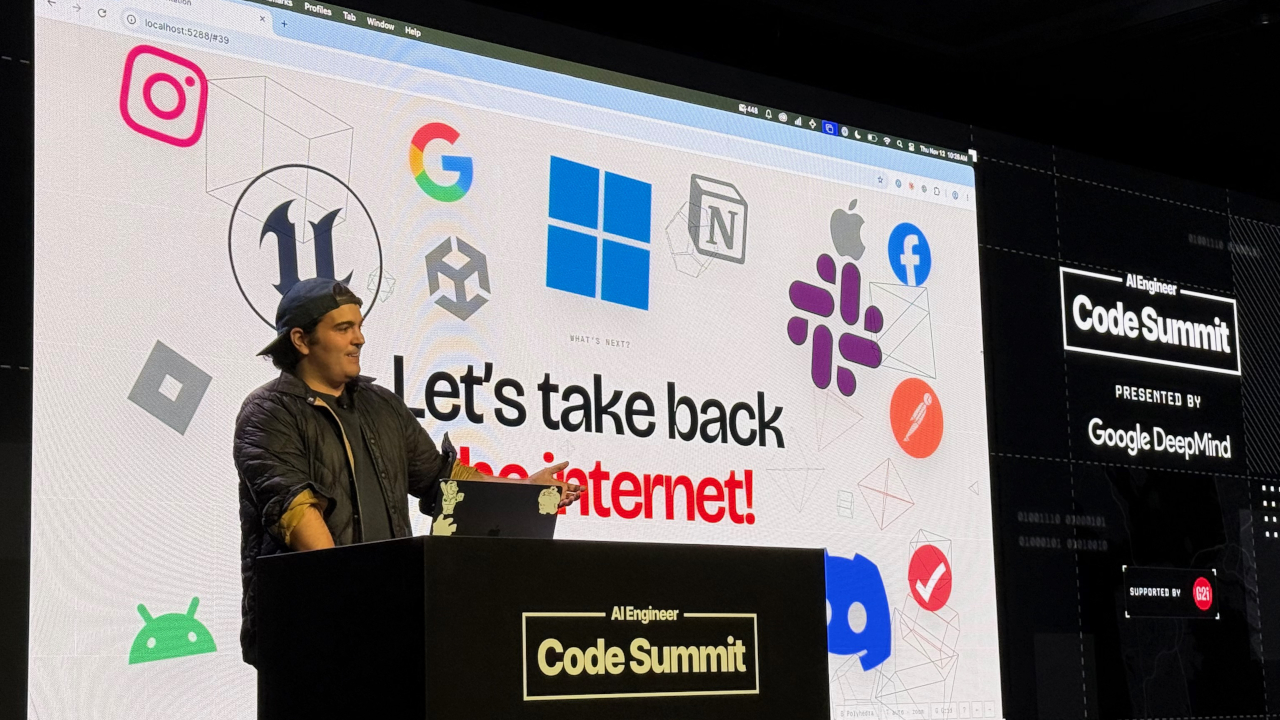
Richard MacManus’s account of ArtCraft’s AI Engineer Code Summit presentation describes PhotoCraft, a Photoshop alternative built from scratch in Rust, alongside PdfCraft, WordCraft and other open-source tools.
Founder Brandon Thomas says the team produced an initial Photoshop approximation within 24 hours, starting with detailed prompts covering tools, data structures and file importers. The project’s own GitHub figures, cited in the article, put PhotoCraft at roughly 76% parity for feature breadth and 46% for professional readiness. Those self-reported scores leave plenty of work between reproducing an interface and supporting professional use.
Thomas describes making the software MCP- and CLI-compatible so agents can operate it, and says artists are already adapting workflows with AI. He also draws a boundary around delegation: humans should handle backend work, schema migrations and API design, while agents get more freedom on desktop applications.
If trying PhotoCraft, test your actual files, exports and editing workflows before relying on its feature list.
Hydrogen’s Price Advantage Widens in December
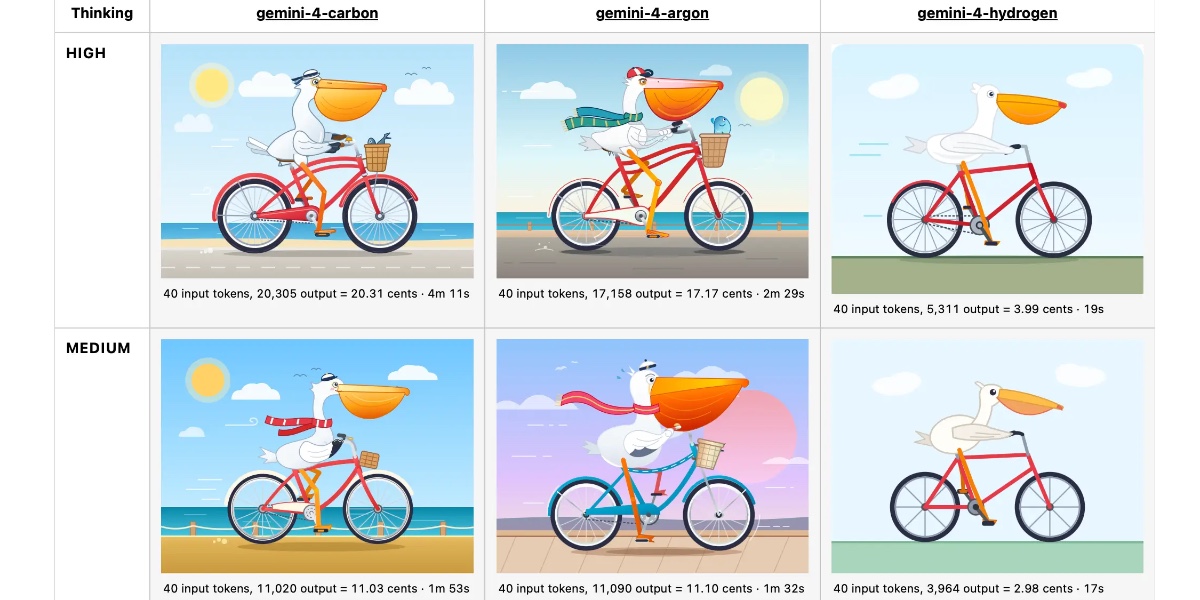
Simon Willison’s llm-gemini 0.37 release note records Hydrogen’s November 12 launch and pricing. Google positions it for everyday coding, running tests and verifying changes, either alone or paired with Carbon and Argon for architectural work.
Those larger models cost $2 input/$10 output per million tokens through November 30, rising to $4/$20 on December 1. Hydrogen’s listed $1.50/$7.50 rates therefore become more attractive after the introductory period ends.
For a multi-model coding workflow, compare spend per accepted change at the December rates, including retries and verification. The cheapest token rate alone does not establish the cheapest execution model.