
GPT-6.2 Astra Gets a 20% Token-Price Cut
Executive Summary
- OpenAI released GPT-6.2 Astra and Sol, with Astra’s input and output token prices down 20%. Cheaper cached input could help long agent sessions, though early hands-on accounts flag uneven results and unnecessary interruptions.
- curl maintainer Daniel Stenberg says agent-generated Rust rewrites missed more than 200 upstream bug fixes. His comparison puts ongoing maintenance alongside the headline achievement of translating a large codebase.
- Simon Willison and Prime Radiant released three external-sandbox implementations for coding agents. They offer a concrete way to isolate generated code and restrict its network access.
GPT-6.2 Lowers Astra’s Token Prices
OpenAI’s November 17 announcement introduces Astra for harder projects and Sol for everyday work, across ChatGPT Work, Codex and the API.
Willison’s hands-on coverage lists gpt-6.2-astra at $8 per million input tokens and $40 per million output tokens, down from $10/$50 for GPT-6 Astra. Cached input falls from $1 to $0.40 per million tokens. Sol stays at $2/$10. Willison also shipped support in LLM 0.38.
The reception is mixed. In Willison’s animation test, neither new model matched the results he preferred from Claude Fable 5.2 and Gemini 4 Carbon. He also quotes Theo Browne describing a two-hour agent run that stopped to ask about an internal reviewer’s output filename. These are individual accounts, with no controlled comparison.
The cached-input discount makes repeated context cheaper. Before switching a long-running workflow, measure completed-task cost and how often someone must intervene.
curl’s Maintainer Counts the Missing Fixes
In a passage quoted by Willison, Stenberg says agents converted 185,000 lines of C into 340,000 lines of Rust over a little more than three weeks. During that period, curl merged more than 300 commits, including over 200 bug fixes and several vulnerability fixes. According to Stenberg, those fixes were absent from the rewrites.
The comparison exposes a recurring cost of replacing mature software: upstream keeps changing while the replacement takes shape. A translation effort needs a way to track security advisories, port fixes and check compatibility throughout development. Lines translated give little information about that work.
Willison and Prime Radiant Release Three Agent Sandboxes
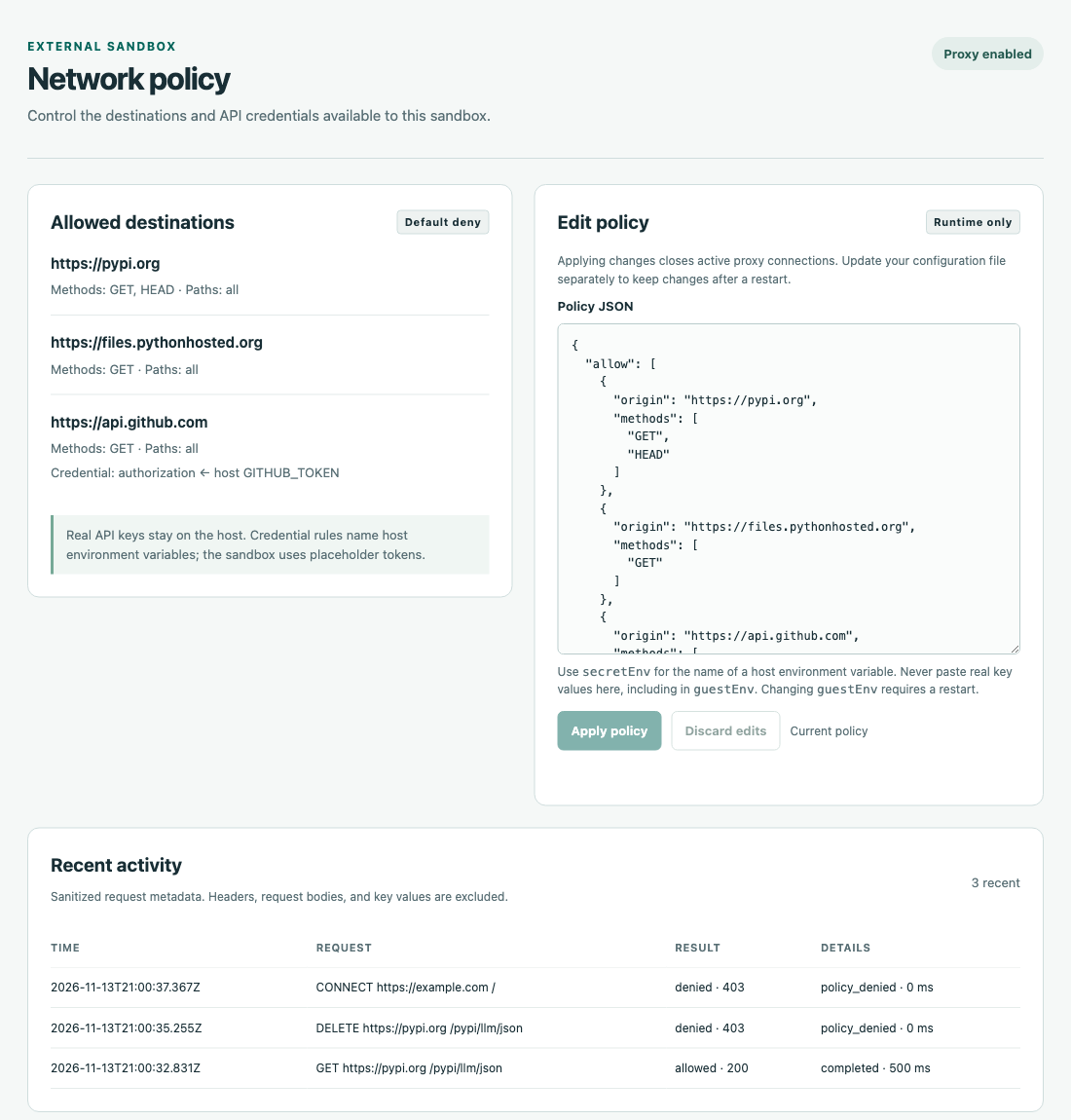
Willison’s external-sandbox project puts executed code inside a dedicated sandbox while the coding agent runs outside it.
The three implementations use v86 to run Alpine Linux in WebAssembly, Apple Containers, or Microsoft’s Quicksand library, which packages QEMU and Alpine Linux. All expose the same localhost API, allowing Pi, Claude Code or Codex to route code execution through them.
An optional HTTP/HTTPS allow-list proxy restricts reachable hosts. A credential-replacement mechanism lets sandboxed code make authenticated API calls without exposing the secret to the agent.
The shared API makes it easier to experiment with different isolation backends. The protection depends on routing execution through the sandbox; tools and permissions retained by the agent outside it still need separate controls.