

Ramp Says Inspect Writes and Ships 75% of Its Code
Executive Summary
- Ramp’s Zach Bruggeman says Inspect writes and ships about 75% of the company’s code. Its company-visible sessions let colleagues challenge diagnoses and inspect the evidence behind changes.
- Warp’s Zach Lloyd proposes replay benchmarks on a team’s own tasks to improve coding agents. His framework makes changes to models, prompts and tools testable parts of an engineering system.
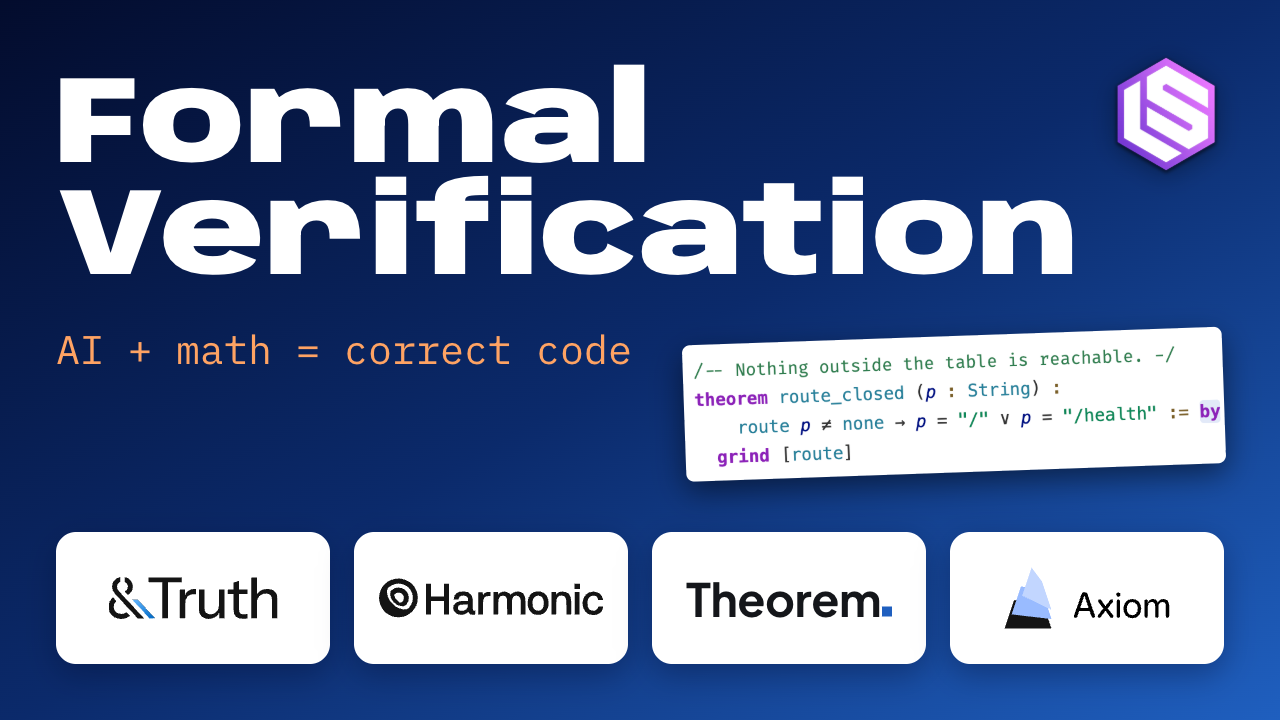
- Formal verification is attracting another set of builders. &Truth combines AI-generated proofs with Lean’s checker, putting precise requirements at the center of checking software correctness.
Ramp Makes Agent Sessions Company-Visible
In an AI Engineer talk published November 20, Bruggeman describes Inspect as a shared, company-wide coding agent. The adoption figure is his account, with no independent measurement presented.
Sessions are visible across the company by default. Reviewers can inspect prompts, tool use, screenshots and video of browser verification, giving them evidence beyond the final patch.
In one debugging example, colleagues challenged the agent’s initial diagnosis and asked it to examine a telemetry library. They deployed a response-body cancellation fix; Bruggeman says the errors stopped afterward. The useful detail is the intervention: shared history let another person redirect the investigation before accepting its explanation.
Teams adopting shared agents can attach execution traces and verification artifacts to changes, so reviewers can inspect how a patch was reached.
Warp Proposes Replay Benchmarks for Coding Agents
In a separate AI Engineer talk published November 20, Lloyd defines a software factory as a “code-defined closed loop system for continuously measuring and improving cloud coding agents.”
His proposed stack includes declarative workflows, centrally recorded sessions and artifacts, sandboxes, and support for multiple models and agent harnesses. Online evaluations can check for problems such as redundant tests. Replay benchmarks use an organization’s own tasks to compare configurations.
“The only way to answer those questions for real is to test on your own data,” Lloyd says. He also describes agents proposing changes to the factory itself as pull requests, keeping those improvements reviewable.
For a team choosing a model or harness, this suggests a concrete starting point: save representative tasks and replay them before changing the setup. Compare output quality and cost under the tools and permissions the team actually uses.
&Truth Uses Lean to Check AI-Written Proofs
Richard MacManus’s November 20 Latent Space article examines formal verification through an interview with Stanford researcher and &Truth co-founder Clark Barrett.
&Truth combines AI with automated reasoning to construct proofs that Lean can check. Barrett describes finding memory-safety problems in C code as a target use case. The company’s broader ambition is to check code against precisely stated requirements.
That last condition matters: a machine-checked proof establishes the specified properties under its assumptions. It cannot supply requirements that developers forgot to express. For builders exploring this approach, a narrow property such as memory safety offers a clearer starting point than a blanket claim that an application is correct.