


Z.ai’s GLM-5.4 Runs 28 Layers Twice
Executive Summary
- Z.ai released GLM-5.4, its first flagship looped transformer. Reusing layers adds computational depth without adding parameters, though the company acknowledges excessively long reasoning on some tasks.
- Dex Horthy argues that software factories need review capacity to match agent throughput. Cheaply generated code and documentation can leave people—and subsequent agents—with expensive cleanup.
- Datasette Charts now works through Datasette Agent. Its demo shows chat and a conventional chart builder sharing a visualization that either the user or agent can work with.
GLM-5.4 Reuses a 28-Layer Block
In its November 23 announcement, Z.ai describes adapting a pretrained model into a looped transformer through continued training. GLM-5.4 runs 28 layers of its 750-billion-parameter base model for two passes, refining hidden states while sharing weights.
The design trades additional computation for greater effective depth. Per-token gates control how much each pass updates the hidden state. A shared global attention cache, supplemented by a separate local window, limits the extra cache memory needed for the second pass.
In a controlled 30B-model comparison, Z.ai reports improved benchmark results with about 10% more total training compute. Outputs on benchmarks including GPQA-Diamond and MMLU-Pro were 10–14% shorter. Those figures describe the smaller experimental model; the company also acknowledges that the flagship can get stuck in “marathon thinking.”
For coding workloads, compare completion time and cost alongside output length: fewer generated tokens can coexist with more computation per token. The release offers chat, Coding Plan and ZCode access; general API access is listed as coming soon, and weights await safety hardening.
Horthy Puts Review Cost Into the Software Factory
In an AI Engineer talk published November 23, Dex Horthy pairs “forward pressure”—routing work into agent-written implementation—with “back pressure”: review, tests, CI and other quality controls.
His anti-slop argument focuses on the recipient’s effort. Output becomes slop when producing it takes less effort than understanding it demands from its consumer. As generation gets cheaper, that imbalance can accumulate across code, documentation and explanations. Later agents can copy the low-quality material, extending its reach.
This gives teams a concrete constraint on automation: scale accepted changes with the capacity to check them. Calibrate human review to risk, and include maintainability in acceptance criteria alongside whether the immediate task passes.
Datasette Lets Chat and the Chart Builder Share Context
Datasette Charts 0.2a0 adds agent access to the same chart suggestion and generation tools used by the application.
In Simon Willison’s demo, he asks for a chart of SQLite-utils downloads, then opens it in the chart builder. He changes the selected project to Datasette through the table interface. When he asks what the chart shows, the agent notices the changed panel and describes the new visualization.
The interaction lets a user refine an agent-created result through ordinary controls, then continue the conversation without narrating every intervening click.
Further Reading
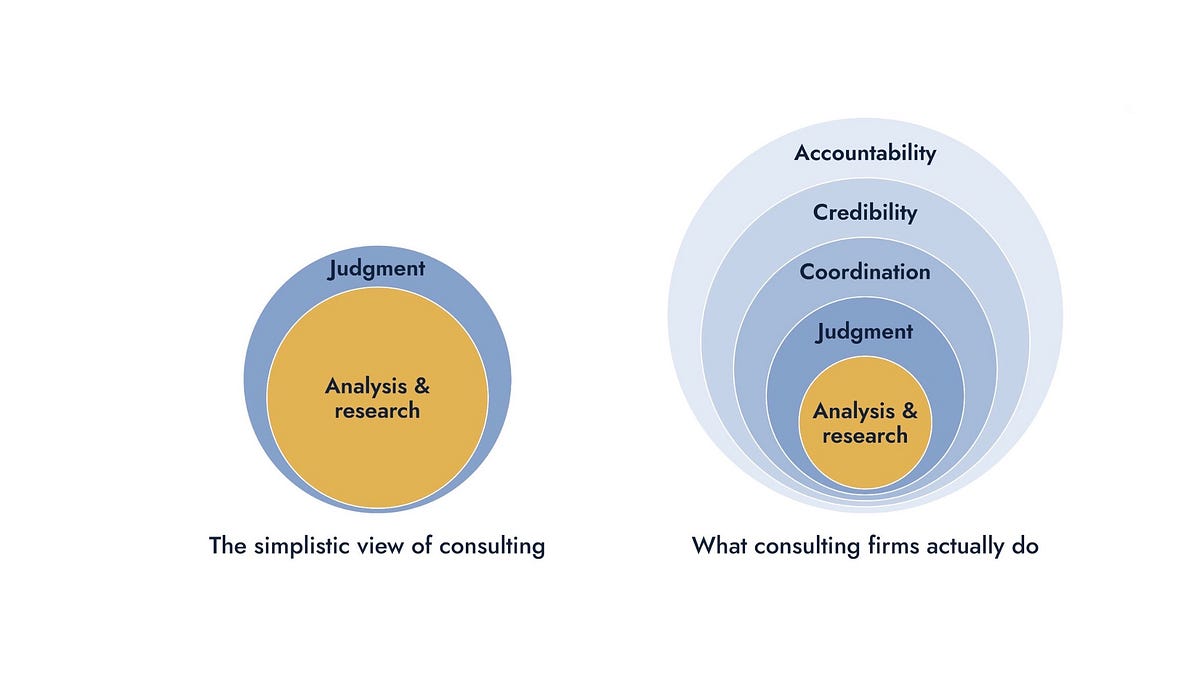
- Rod Moshtagi and Sayash Kapoor on management consulting: Five sources of client value—analysis, judgment, coordination, credibility and accountability—offer a useful framework for assessing which parts of knowledge work AI can absorb.