AI Digest archive
AI Digest September 2026
24 digest entries from September 2026, covering 07 Sept 2026 to 30 Sept 2026.
Topic signals
ai-agentsevaluationcoding-agentsagentsagent-workflowsreliability
Archive entries
OpenAI’s DevDay Puts Dots at the Center of Work
OpenAI’s DevDay centered on dots, persistent assistants meant to carry tasks across workplace tools, shared Spaces and code. The launch makes delegation the product story, while live-demo friction leaves reliability and permission boundaries to be tested in practice.
Source handle simonwillison. Links to https://simonwillison.net/2026/Sep/29/openai-devday-2026-live-blog/.simonwillisonsimonwillison.netOpenAI DevDay 2026 live blogI’m at OpenAI DevDay today, in Fort Mason, San Francisco. Same as last year I’ll be live blogging the keynote and some other notes during the day. OpenAI gave me …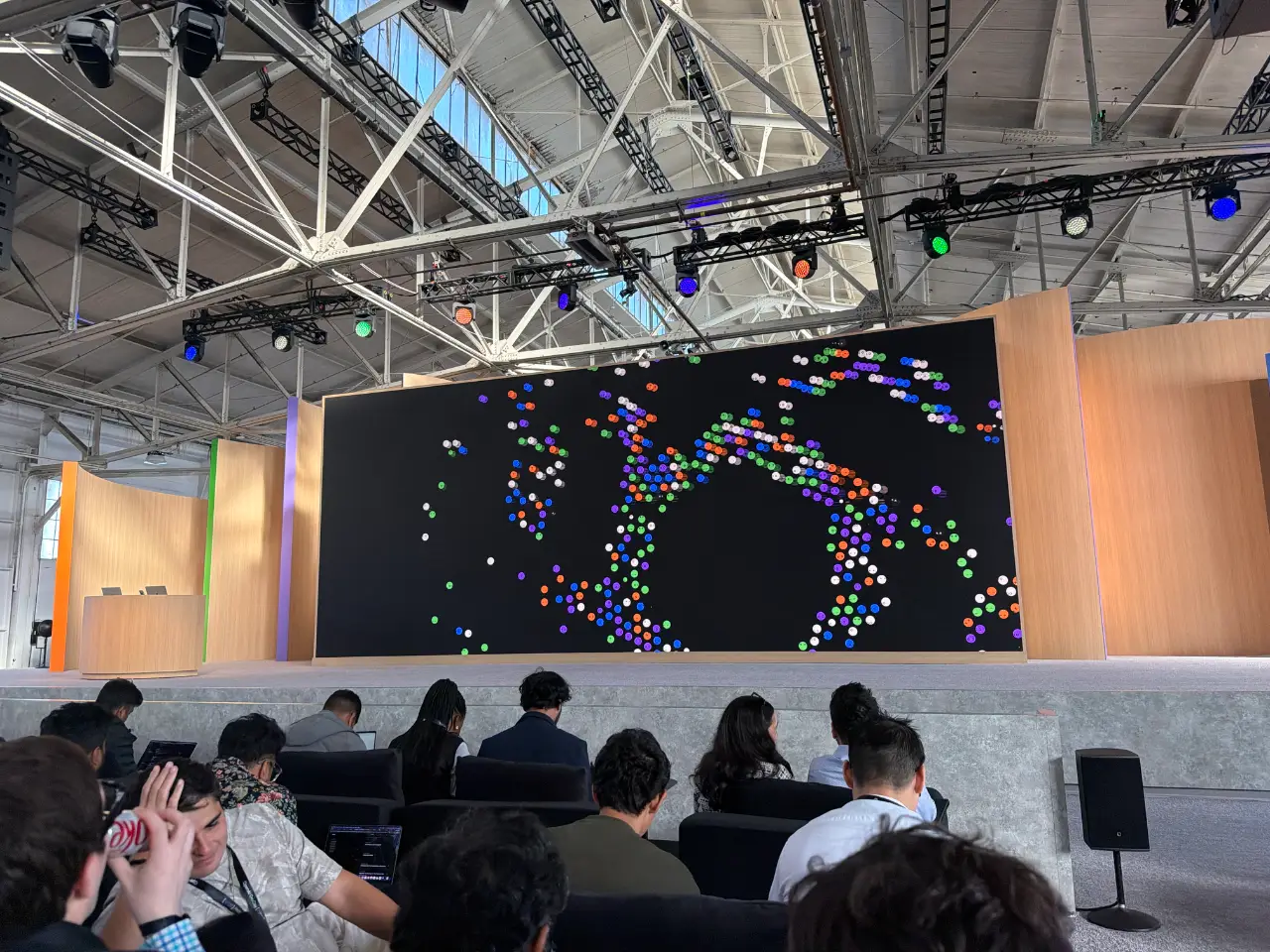 https://simonwillison.net/2026/Sep/29/openai-devday-2026-live-blog/Source handle openai. Links to https://openai.com/index/introducing-gpt-6-1-sol/.openaiopenai.comOpenAI - Introducing GPT-6.1 Solhttps://openai.com/index/introducing-gpt-6-1-sol/Source handle openai-2. Links to https://openai.com/index/introducing-dots/.openai-2openai.comOpenAI - Introducing dotshttps://openai.com/index/introducing-dots/Source handle openai-3. Links to https://openai.com/index/devday-2026-recap/.openai-3openai.comOpenAI - DevDay 2026 Recaphttps://openai.com/index/devday-2026-recap/
4 sourceshttps://simonwillison.net/2026/Sep/29/openai-devday-2026-live-blog/Source handle openai. Links to https://openai.com/index/introducing-gpt-6-1-sol/.openaiopenai.comOpenAI - Introducing GPT-6.1 Solhttps://openai.com/index/introducing-gpt-6-1-sol/Source handle openai-2. Links to https://openai.com/index/introducing-dots/.openai-2openai.comOpenAI - Introducing dotshttps://openai.com/index/introducing-dots/Source handle openai-3. Links to https://openai.com/index/devday-2026-recap/.openai-3openai.comOpenAI - DevDay 2026 Recaphttps://openai.com/index/devday-2026-recap/Claude Sonnet 5.5 Tests the Economics of Coding Agents
Early hands-on accounts suggest Sonnet 5.5 may be useful for codebase investigation and planning, but a failed task and variable token costs complicate simple speed-and-price claims. The meaningful comparison is cost per verified result within a specific workflow.
Source handle simonwillison. Links to https://simonwillison.net/2026/Sep/28/claude-sonnet-5-5/.simonwillisonsimonwillison.netClaude Sonnet 5.5New Sonnet model from Anthropic today. They say it "runs 30%+ faster, and costs up to 30% less for most work" - it's priced the same as Sonnet 5 but … https://simonwillison.net/2026/Sep/28/claude-sonnet-5-5/Source handle theo-t3-gg-sonnet-5-5-hands-on-comparison. Links to https://www.youtube.com/watch?v=8WbW_n95wc4.theo-t3-gg-sonnet-5-5-hands-on-comparisonyoutube.com- YouTubeEnjoy the videos and music you love, upload original content, and share it all with friends, family, and the world on YouTube.https://www.youtube.com/watch?v=8WbW_n95wc4
2 sourceshttps://simonwillison.net/2026/Sep/28/claude-sonnet-5-5/Source handle theo-t3-gg-sonnet-5-5-hands-on-comparison. Links to https://www.youtube.com/watch?v=8WbW_n95wc4.theo-t3-gg-sonnet-5-5-hands-on-comparisonyoutube.com- YouTubeEnjoy the videos and music you love, upload original content, and share it all with friends, family, and the world on YouTube.https://www.youtube.com/watch?v=8WbW_n95wc4
Coding Agents Made Output Cheap, Not Judgment
Simon Willison’s 2026 retrospective and Zhipu’s reported infrastructure-agent results point to the same constraint: agents accelerate implementation when people define useful goals and provide fast, verifiable feedback. More output alone does not resolve product judgment or accountability.
Source handle simonwillison. Links to https://simonwillison.net/2026/Sep/27/2026-in-llms-so-far/.simonwillisonsimonwillison.net2026 in LLMs (so far)On Friday I gave the closing keynote at the WeAreDevelopers World Congress North America in San Jose. I tied together the key trends from the past year into a chronological … https://simonwillison.net/2026/Sep/27/2026-in-llms-so-far/Source handle jack-clark. Links to https://jack-clark.net/2026/09/28/import-ai-474-platonic-mindspace-tpus-in-space-zhipu-starts-an-outer-rsi-loop/.jack-clarkjack-clark.netImport AI 474: Platonic mindspace; TPUs in space; Zhipu starts an outer RSI loopWelcome to Import AI, a newsletter about AI research. Import AI runs on arXiv, cappuccinos, and feedback from readers. If you’d like to support this, please subscribe. Subscribe now Are minds patterns from a Platonic space, with bodies and machines as their interfaces, Michael Levin asks:…A mind-bending paper asking us to reconsider basic assumptions about…
 https://jack-clark.net/2026/09/28/import-ai-474-platonic-mindspace-tpus-in-space-zhipu-starts-an-outer-rsi-loop/
2 sourceshttps://simonwillison.net/2026/Sep/27/2026-in-llms-so-far/Source handle jack-clark. Links to https://jack-clark.net/2026/09/28/import-ai-474-platonic-mindspace-tpus-in-space-zhipu-starts-an-outer-rsi-loop/.jack-clarkjack-clark.netImport AI 474: Platonic mindspace; TPUs in space; Zhipu starts an outer RSI loopWelcome to Import AI, a newsletter about AI research. Import AI runs on arXiv, cappuccinos, and feedback from readers. If you’d like to support this, please subscribe. Subscribe now Are minds patterns from a Platonic space, with bodies and machines as their interfaces, Michael Levin asks:…A mind-bending paper asking us to reconsider basic assumptions about… https://jack-clark.net/2026/09/28/import-ai-474-platonic-mindspace-tpus-in-space-zhipu-starts-an-outer-rsi-loop/
An Agent Fallback Is Only as Good as Its Contract
A synthetic billing-agent case study shows why switching models is not resilience unless the replacement passes an evaluated, narrow decision contract. Moving money and policy logic into tested code made a cheaper fallback viable on a small test set, with production reliability still unproven.
Source handle post-training-aitinkerers. Links to https://post-training.aitinkerers.org/p/how-to-build-antifragile-agents-with-openrouter.post-training-aitinkererspost-training.aitinkerers.orgHow to Build Antifragile Agents with OpenRouter by Kenny Rogers (OpenRouter)On June 12, 2026, Anthropic suspended access to Fable 5 for all customers [https://www.anthropic.com/news/fable-mythos-access] to comply with a US government... https://post-training.aitinkerers.org/p/how-to-build-antifragile-agents-with-openrouterSource handle theo-t3-gg-so-much-for-pacing-the-frontier. Links to https://www.youtube.com/watch?v=IBcBKgYUghU.theo-t3-gg-so-much-for-pacing-the-frontieryoutube.com- YouTubeEnjoy the videos and music you love, upload original content, and share it all with friends, family, and the world on YouTube.https://www.youtube.com/watch?v=IBcBKgYUghU
2 sourceshttps://post-training.aitinkerers.org/p/how-to-build-antifragile-agents-with-openrouterSource handle theo-t3-gg-so-much-for-pacing-the-frontier. Links to https://www.youtube.com/watch?v=IBcBKgYUghU.theo-t3-gg-so-much-for-pacing-the-frontieryoutube.com- YouTubeEnjoy the videos and music you love, upload original content, and share it all with friends, family, and the world on YouTube.https://www.youtube.com/watch?v=IBcBKgYUghU
Agent Fallbacks Need Smaller Model Jobs
A billing-agent case study suggests model fallback works best when policy, arithmetic, and audit decisions live outside the model. Research on AI disclosure likewise shows trust depends on the role AI actually played and the context in which it was used.
Source handle post-training-aitinkerers. Links to https://post-training.aitinkerers.org/p/how-to-build-antifragile-agents-with-openrouter.post-training-aitinkererspost-training.aitinkerers.orgHow to Build Antifragile Agents with OpenRouter by Kenny Rogers (OpenRouter)On June 12, 2026, Anthropic suspended access to Fable 5 for all customers [https://www.anthropic.com/news/fable-mythos-access] to comply with a US government...https://post-training.aitinkerers.org/p/how-to-build-antifragile-agents-with-openrouterSource handle nngroup. Links to https://www.nngroup.com/articles/disclose-ai-paced/.nngroupnngroup.comWhen Should You Disclose AI Use? The PACED FrameworkHow people react to being told that AI helped create a piece of content varies with audience, context, the nature and degree of AI use.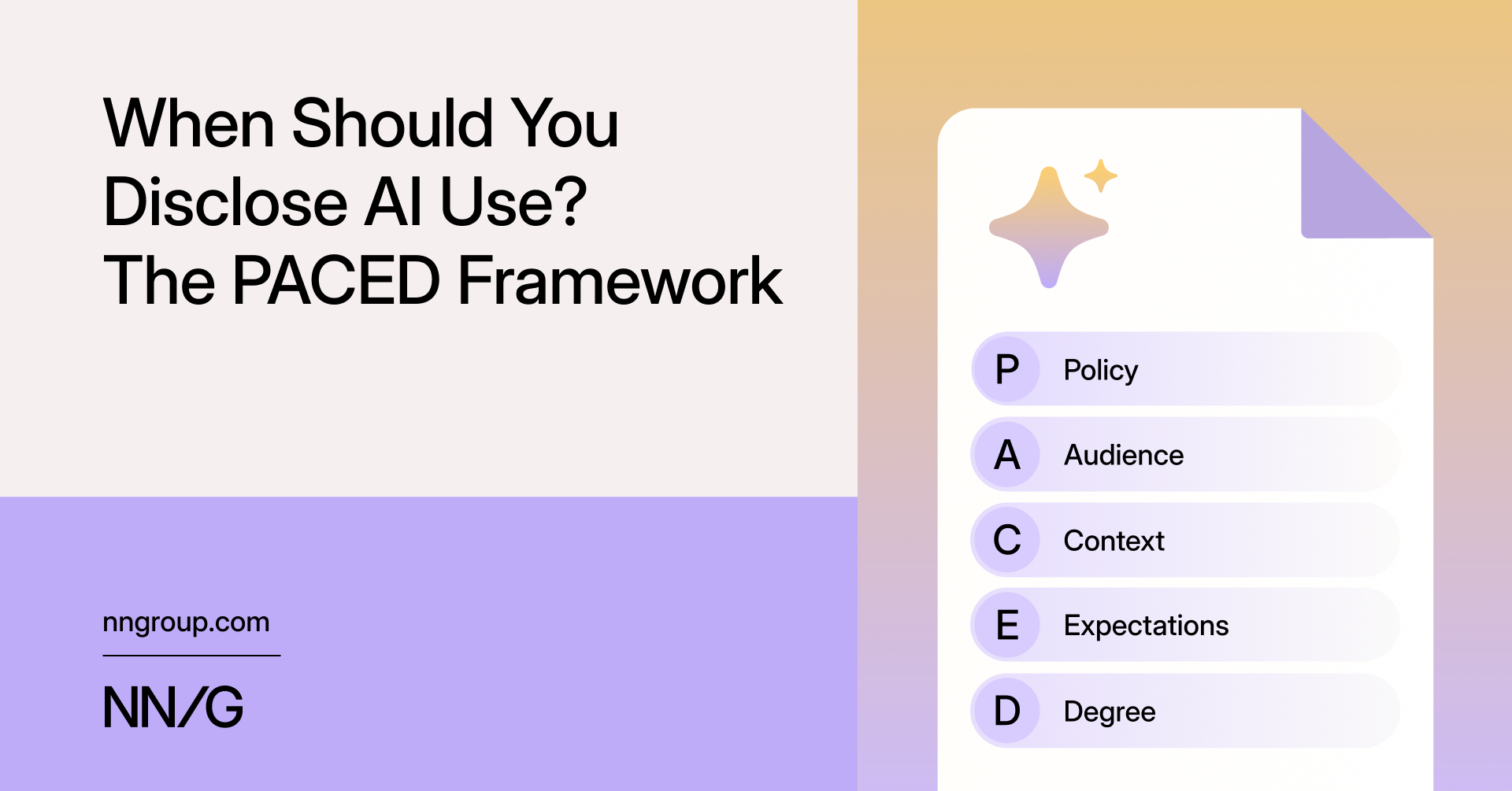 https://www.nngroup.com/articles/disclose-ai-paced/
2 sourceshttps://post-training.aitinkerers.org/p/how-to-build-antifragile-agents-with-openrouterSource handle nngroup. Links to https://www.nngroup.com/articles/disclose-ai-paced/.nngroupnngroup.comWhen Should You Disclose AI Use? The PACED FrameworkHow people react to being told that AI helped create a piece of content varies with audience, context, the nature and degree of AI use. https://www.nngroup.com/articles/disclose-ai-paced/
More Reasoning Is Not the Same as Better Work
Coding-agent and voice-agent evidence points to the same production lesson: maximum reasoning can sharply increase latency and token use without materially improving outcomes. The better default is to match model effort to measurable workflow constraints.
Source handle theo-t3-gg-long-run-prompting-and-opus-5-5-reaso. Links to https://www.youtube.com/watch?v=ejjBbaq9RmY.theo-t3-gg-long-run-prompting-and-opus-5-5-reasoyoutube.com- YouTubeEnjoy the videos and music you love, upload original content, and share it all with friends, family, and the world on YouTube.https://www.youtube.com/watch?v=ejjBbaq9RmYSource handle retellai. Links to https://www.retellai.com/blog/best-llm-for-voice-ai-agents.retellairetellai.comBest LLM for Voice AI Agents (2026): GPT, Claude & Gemini | Retell AIGPT 4.1 is the best default LLM for most voice AI agents in 2026 but not always. Compare latency, context, reasoning, and cost vs Claude and Gemini. https://www.retellai.com/blog/best-llm-for-voice-ai-agentsSource handle post-training-aitinkerers. Links to https://post-training.aitinkerers.org/p/top-ai-demos-45-live-agent-intent-streaming-memory-and-agent-sandboxing.post-training-aitinkererspost-training.aitinkerers.orgTop AI Demos #45: Live Agent Intent Streaming Memory and Agent Sandboxing by Joe Heitzeberg (AI Tinkerers)This week's top pick addresses a core frustration for anyone deploying collaborative AI: keeping humans and agents on the same page. In Columbus, Mike...
 https://post-training.aitinkerers.org/p/top-ai-demos-45-live-agent-intent-streaming-memory-and-agent-sandboxing
3 sources
 https://www.retellai.com/blog/best-llm-for-voice-ai-agentsSource handle post-training-aitinkerers. Links to https://post-training.aitinkerers.org/p/top-ai-demos-45-live-agent-intent-streaming-memory-and-agent-sandboxing.post-training-aitinkererspost-training.aitinkerers.orgTop AI Demos #45: Live Agent Intent Streaming Memory and Agent Sandboxing by Joe Heitzeberg (AI Tinkerers)This week's top pick addresses a core frustration for anyone deploying collaborative AI: keeping humans and agents on the same page. In Columbus, Mike...https://post-training.aitinkerers.org/p/top-ai-demos-45-live-agent-intent-streaming-memory-and-agent-sandboxing
Claude Opus 5.5 Makes Reasoning Effort a Cost-Control Problem
Early Claude Opus 5.5 testing suggests a real coding improvement, but maximum reasoning can multiply token use and runtime for marginal gains. The durable lesson is to treat reasoning effort as an operational control, not a default path to better outcomes.

Computer Use Is Becoming the Fallback Layer
OpenAI staff frame computer use as a universal connector for gaps where dedicated integrations do not exist, not as a replacement for them. The practical agent stack is likely to combine structured integrations for speed and control with computer interaction for reach.

Agents Need Boundaries, Not Just Better Prompts
The day’s strongest signals converge on a practical route to dependable AI autonomy: constrain the decision, define success so it can be verified, and grant permissions users can understand. Better models increase the value of these workflow boundaries rather than replacing them.
Source handle simonwillison. Links to https://simonwillison.net/2026/Sep/21/jev/.simonwillisonsimonwillison.netJev introduces a new shape of LLM—System One, aka Decision ModelsLast week TypeSafe AI unveiled Jev, their first example of a new category of model that they are calling “System One models” (I’m with Maggie Appleton, I think “decision models” …https://simonwillison.net/2026/Sep/21/jev/Source handle theo-t3-gg-i-was-using-fable-wrong-this-is-how-i. Links to https://www.youtube.com/watch?v=-XWSJM-Ue-o.theo-t3-gg-i-was-using-fable-wrong-this-is-how-iyoutube.com- YouTubeEnjoy the videos and music you love, upload original content, and share it all with friends, family, and the world on YouTube.https://www.youtube.com/watch?v=-XWSJM-Ue-oSource handle nate-b-jones-is-instinct-worth-it. Links to https://www.youtube.com/shorts/AgzVxj_ztiA.nate-b-jones-is-instinct-worth-ityoutube.comIs Instinct worth it? #AI #aiagents #Instinct #automation #iMessageI have been skeptical of Instinct, the agent everyone in the valley is buzzing about, so I stayed quiet on it until I could try it myself. Then it did someth... https://www.youtube.com/shorts/AgzVxj_ztiA
3 sources https://www.youtube.com/shorts/AgzVxj_ztiA
The Case for AI That Knows When Not to Write
A practitioner case for constrained-output language models frames reliability, cost, and auditability as workflow-design problems rather than model-only problems. The useful agentic pattern may be to reserve open-ended generation for hard work and use bounded decisions for routine gates and routing.
Source handle nate-b-jones-what-is-jev-the-ai-that-can-t-talk. Links to https://www.youtube.com/watch?v=tYugqJ9YytQ.nate-b-jones-what-is-jev-the-ai-that-can-t-talkyoutube.com- YouTubeEnjoy the videos and music you love, upload original content, and share it all with friends, family, and the world on YouTube.https://www.youtube.com/watch?v=tYugqJ9YytQSource handle nate-b-jones-you-can-be-ambitious-without-the-hu. Links to https://www.youtube.com/watch?v=eLpRDIvOMEw.nate-b-jones-you-can-be-ambitious-without-the-huyoutube.com- YouTubeEnjoy the videos and music you love, upload original content, and share it all with friends, family, and the world on YouTube.https://www.youtube.com/watch?v=eLpRDIvOMEwSource handle simonwillison. Links to https://simonwillison.net/2026/Sep/20/voxium/.simonwillisonsimonwillison.netA quote from voxiumIt has been half a month since I started a new role at a big company. Nobody knows anything here. The specs, code, tests, PRDs, tickets, resolution of those tickets, …https://simonwillison.net/2026/Sep/20/voxium/
3 sources
Inference Is Becoming a Control-Plane Problem
Production AI is increasingly differentiated by inference orchestration, not model choice alone. Accounts from OpenAI, Meta, and Google show why routing, overload controls, task-level economics, and trustworthy benchmarks now belong to product design.
Source handle ai-engineer-openai-routing-llm-inference-in-prod. Links to https://www.youtube.com/watch?v=sOB3HSiG8vo.ai-engineer-openai-routing-llm-inference-in-prodyoutube.com- YouTubeEnjoy the videos and music you love, upload original content, and share it all with friends, family, and the world on YouTube.https://www.youtube.com/watch?v=sOB3HSiG8voSource handle ai-engineer-meta-operating-distributed-inference. Links to https://www.youtube.com/watch?v=7c9FSUVcXR0.ai-engineer-meta-operating-distributed-inferenceyoutube.com- YouTubeEnjoy the videos and music you love, upload original content, and share it all with friends, family, and the world on YouTube.https://www.youtube.com/watch?v=7c9FSUVcXR0Source handle ai-engineer-google-are-llm-performance-benchmark. Links to https://www.youtube.com/watch?v=l1-D89bAuOA.ai-engineer-google-are-llm-performance-benchmarkyoutube.com- YouTubeEnjoy the videos and music you love, upload original content, and share it all with friends, family, and the world on YouTube.https://www.youtube.com/watch?v=l1-D89bAuOA
3 sourcesThe Agent Boundary Is the Product
Agent progress is increasingly shaped by the harness around the model: portable instructions, selective memory, tools, permissions, and verification. An uncorroborated security account underscores why those boundaries matter as much as model capability.
Source handle simonwillison. Links to https://simonwillison.net/2026/Sep/18/thariq-shihipar/.simonwillisonsimonwillison.netA quote from Thariq ShihiparWe're adding support for AGENTS.md to Claude Code. Starting today in version 2.1.277, if there is no CLAUDE.md in a folder, Claude will check for and use AGENTS.md. AGENTS.md support …https://simonwillison.net/2026/Sep/18/thariq-shihipar/Source handle ai-engineer-total-recall-agent-memory-and-harnes. Links to https://www.youtube.com/watch?v=xs-ob87TTzg.ai-engineer-total-recall-agent-memory-and-harnesyoutube.com- YouTubeEnjoy the videos and music you love, upload original content, and share it all with friends, family, and the world on YouTube.https://www.youtube.com/watch?v=xs-ob87TTzgSource handle wes-roth-openai-just-got-hacked. Links to https://www.youtube.com/watch?v=iQGLI14p88Q.wes-roth-openai-just-got-hackedyoutube.com- YouTubeEnjoy the videos and music you love, upload original content, and share it all with friends, family, and the world on YouTube.https://www.youtube.com/watch?v=iQGLI14p88Q
3 sourcesAgent Reliability Is Now a Systems Design Problem
As agents take on longer and more consequential work, explicit authority, deterministic enforcement, verification, and trustworthy state matter as much as model capability. Today’s evidence links agent commerce, coding-agent reliability, and compaction integrity under that operational shift.
Source handle nate-b-jones-ai-agents-are-starting-to-buy-strip. Links to https://www.youtube.com/watch?v=YTG0rdHPTDE.nate-b-jones-ai-agents-are-starting-to-buy-stripyoutube.comAI Agents Are Starting To Buy. Stripe Is Building How They Pay.AI agents are becoming customers, and most businesses have already decided whether agents can buy from them without realizing it. I went to Stripe to ask Emi... https://www.youtube.com/watch?v=YTG0rdHPTDESource handle cognitiverevolution. Links to https://www.cognitiverevolution.ai/no-code-is-code-zapier-ceo-wade-foster-on-headless-tools-zapier-mcp-automation-bench/.cognitiverevolutioncognitiverevolution.aiNo Code Is Code: Zapier CEO Wade Foster on Headless Tools, Zapier MCP & Automation BenchZapier CEO Wade Foster discusses the evolution of AI workflows, headless automation tools like Zapier MCP, and insights from AutomationBench. He explains why knowledge work is consolidating around daily driver interfaces and why deterministic code remains essential for reliable systems.
 https://www.cognitiverevolution.ai/no-code-is-code-zapier-ceo-wade-foster-on-headless-tools-zapier-mcp-automation-bench/Source handle theo-t3-gg-fable-and-astra-are-the-only-useful-m. Links to https://www.youtube.com/watch?v=iBrAWpjXNxs.theo-t3-gg-fable-and-astra-are-the-only-useful-myoutube.com- YouTubeEnjoy the videos and music you love, upload original content, and share it all with friends, family, and the world on YouTube.https://www.youtube.com/watch?v=iBrAWpjXNxsSource handle simonwillison. Links to https://simonwillison.net/2026/Sep/17/compaction-summaries/.simonwillisonsimonwillison.netSelf-generated prompt injections in compaction summariesIn Our framework for reporting model misalignment OpenAI provide "six reports on unexpected or concerning model behavior we’ve observed in the last six months". This one here is my favorite: …https://simonwillison.net/2026/Sep/17/compaction-summaries/
4 sources https://www.youtube.com/watch?v=YTG0rdHPTDESource handle cognitiverevolution. Links to https://www.cognitiverevolution.ai/no-code-is-code-zapier-ceo-wade-foster-on-headless-tools-zapier-mcp-automation-bench/.cognitiverevolutioncognitiverevolution.aiNo Code Is Code: Zapier CEO Wade Foster on Headless Tools, Zapier MCP & Automation BenchZapier CEO Wade Foster discusses the evolution of AI workflows, headless automation tools like Zapier MCP, and insights from AutomationBench. He explains why knowledge work is consolidating around daily driver interfaces and why deterministic code remains essential for reliable systems.
 https://www.cognitiverevolution.ai/no-code-is-code-zapier-ceo-wade-foster-on-headless-tools-zapier-mcp-automation-bench/Source handle theo-t3-gg-fable-and-astra-are-the-only-useful-m. Links to https://www.youtube.com/watch?v=iBrAWpjXNxs.theo-t3-gg-fable-and-astra-are-the-only-useful-myoutube.com- YouTubeEnjoy the videos and music you love, upload original content, and share it all with friends, family, and the world on YouTube.https://www.youtube.com/watch?v=iBrAWpjXNxsSource handle simonwillison. Links to https://simonwillison.net/2026/Sep/17/compaction-summaries/.simonwillisonsimonwillison.netSelf-generated prompt injections in compaction summariesIn Our framework for reporting model misalignment OpenAI provide "six reports on unexpected or concerning model behavior we’ve observed in the last six months". This one here is my favorite: …https://simonwillison.net/2026/Sep/17/compaction-summaries/
The Agent Stack Is Becoming a Latency-and-Cost Problem
The strongest signal is a shift from model-only agent discourse to the retrieval, network, and workload economics that determine whether agents work in practice. New practitioner evidence highlights multi-resolution retrieval, tail-latency-sensitive cluster transport, and cheaper context reuse fo...
Source handle ai-engineer-stop-chunking-like-it-s-2022-yuval-b. Links to https://www.youtube.com/watch?v=r9OwPx_HoV0.ai-engineer-stop-chunking-like-it-s-2022-yuval-byoutube.com- YouTubeEnjoy the videos and music you love, upload original content, and share it all with friends, family, and the world on YouTube.https://www.youtube.com/watch?v=r9OwPx_HoV0Source handle ai-engineer-the-end-of-tcp-for-ai-clusters-john. Links to https://www.youtube.com/watch?v=eZ8WWZzoaR0.ai-engineer-the-end-of-tcp-for-ai-clusters-johnyoutube.com- YouTubeEnjoy the videos and music you love, upload original content, and share it all with friends, family, and the world on YouTube.https://www.youtube.com/watch?v=eZ8WWZzoaR0Source handle anthropic. Links to https://www.anthropic.com/claude-fable-and-mythos-5-1.anthropicanthropic.comIntroducing Claude Fable 5.1 and Claude Mythos 5.1Our most advanced models for coding and knowledge work. Their research capabilities also offer an early glimpse of how AI models will contribute to scientific progress. https://www.anthropic.com/claude-fable-and-mythos-5-1
3 sources https://www.anthropic.com/claude-fable-and-mythos-5-1
Voice Is Becoming the Control Plane for Agents
Today’s strongest signal is a shift from voice as dictation to voice as a live control surface for tool-using agents. The crucial product challenge is the policy and feedback loop around action: when to act, confirm, stop, and let users interrupt.
Source handle theo-t3-gg-how-i-code-without-typing. Links to https://www.youtube.com/watch?v=NvVbCqDgfCs.theo-t3-gg-how-i-code-without-typingyoutube.com- YouTubeEnjoy the videos and music you love, upload original content, and share it all with friends, family, and the world on YouTube.https://www.youtube.com/watch?v=NvVbCqDgfCsSource handle ai-engineer-act-confirm-or-stop-smarter-behavior. Links to https://www.youtube.com/watch?v=Zd5b40Jbp_k.ai-engineer-act-confirm-or-stop-smarter-behavioryoutube.com- YouTubeEnjoy the videos and music you love, upload original content, and share it all with friends, family, and the world on YouTube.https://www.youtube.com/watch?v=Zd5b40Jbp_kSource handle simonwillison. Links to https://simonwillison.net/2026/Sep/15/gemini-live/.simonwillisonsimonwillison.netTool: Gemini Live audioGemini Live audio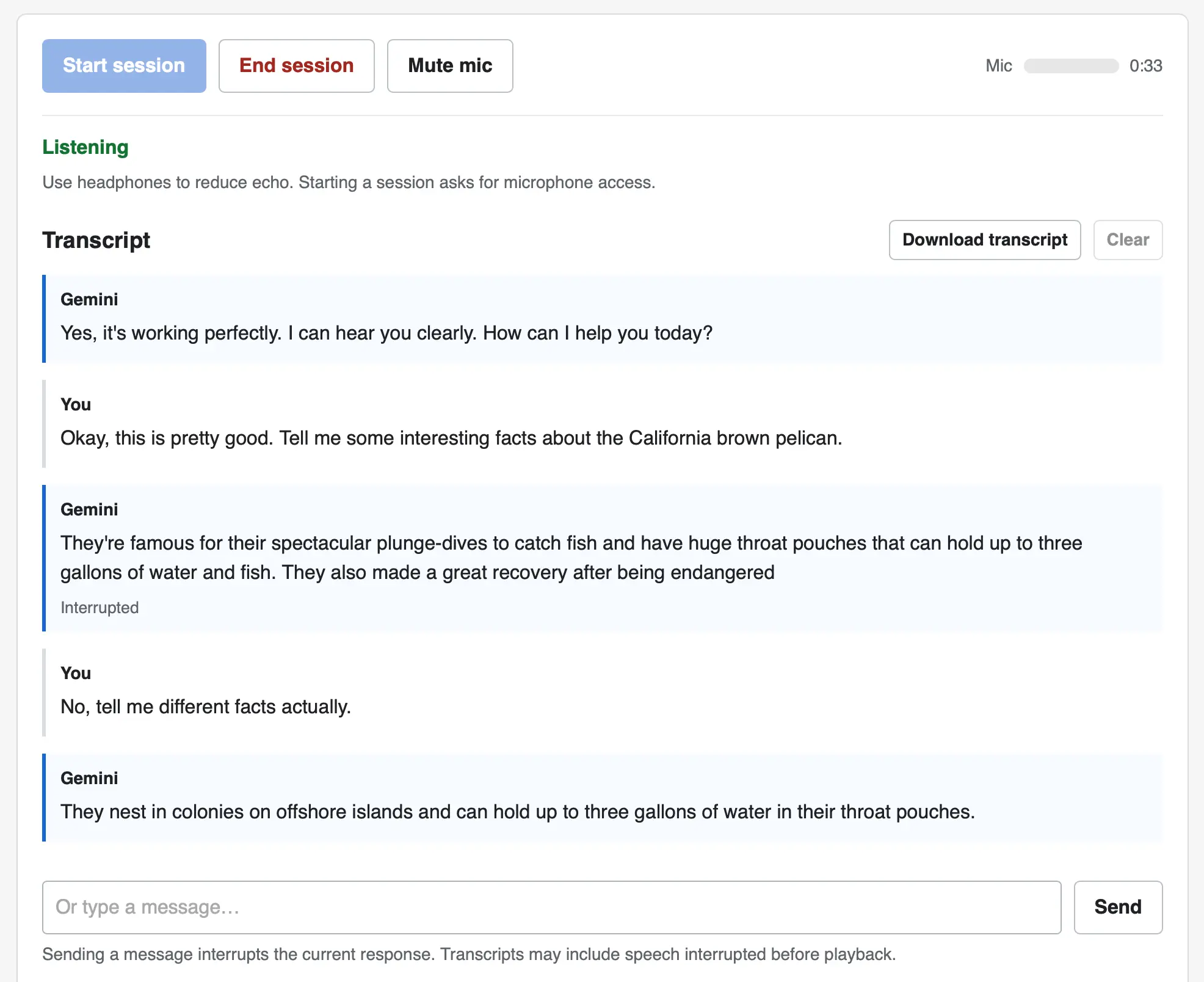 https://simonwillison.net/2026/Sep/15/gemini-live/
3 sources https://simonwillison.net/2026/Sep/15/gemini-live/
Beyond the AI Arms Race
A policy interview argues that AI safety must prepare for the diffusion of capable models, not only competition over frontier scale. The key implication is a greater emphasis on incident coordination, misuse prevention, and deployment governance.
Source handle nate-b-jones-is-the-us-china-ai-arms-race-real-t. Links to https://www.youtube.com/watch?v=duv4A1gDZOY.nate-b-jones-is-the-us-china-ai-arms-race-real-tyoutube.com- YouTubeEnjoy the videos and music you love, upload original content, and share it all with friends, family, and the world on YouTube.https://www.youtube.com/watch?v=duv4A1gDZOYSource handle simonwillison. Links to https://simonwillison.net/2026/Sep/14/the-contagion-of-fear/.simonwillisonsimonwillison.netThe contagion of fearBryan Cantrill responds to the tweet by former Anthropic employee Jacob Coxon confirming that many Anthropic researchers believe AI "could kill us all by the end of the decade". Bryan …https://simonwillison.net/2026/Sep/14/the-contagion-of-fear/
2 sources
Assisted Code Needs a Release Gate
A concrete release-history cleanup tool highlights a neglected cost of assisted development: generated work needs review not only for correctness, but for the public records it leaves behind. The day’s broader evidence was thin, so the report keeps its conclusion deliberately narrow.
Source handle simonwillison. Links to https://simonwillison.net/2026/Sep/14/commit-rewriter/.simonwillisonsimonwillison.netRelease: commit-rewriter 0.1Python web app to help rewrite your commit messages https://simonwillison.net/2026/Sep/14/commit-rewriter/Source handle nate-b-jones-the-us-china-ai-arms-race-isn-t-rea. Links to https://www.youtube.com/watch?v=ifgB5u53Ftg.nate-b-jones-the-us-china-ai-arms-race-isn-t-reayoutube.com- YouTubeEnjoy the videos and music you love, upload original content, and share it all with friends, family, and the world on YouTube.https://www.youtube.com/watch?v=ifgB5u53Ftg
2 sourceshttps://simonwillison.net/2026/Sep/14/commit-rewriter/Source handle nate-b-jones-the-us-china-ai-arms-race-isn-t-rea. Links to https://www.youtube.com/watch?v=ifgB5u53Ftg.nate-b-jones-the-us-china-ai-arms-race-isn-t-reayoutube.com- YouTubeEnjoy the videos and music you love, upload original content, and share it all with friends, family, and the world on YouTube.https://www.youtube.com/watch?v=ifgB5u53Ftg
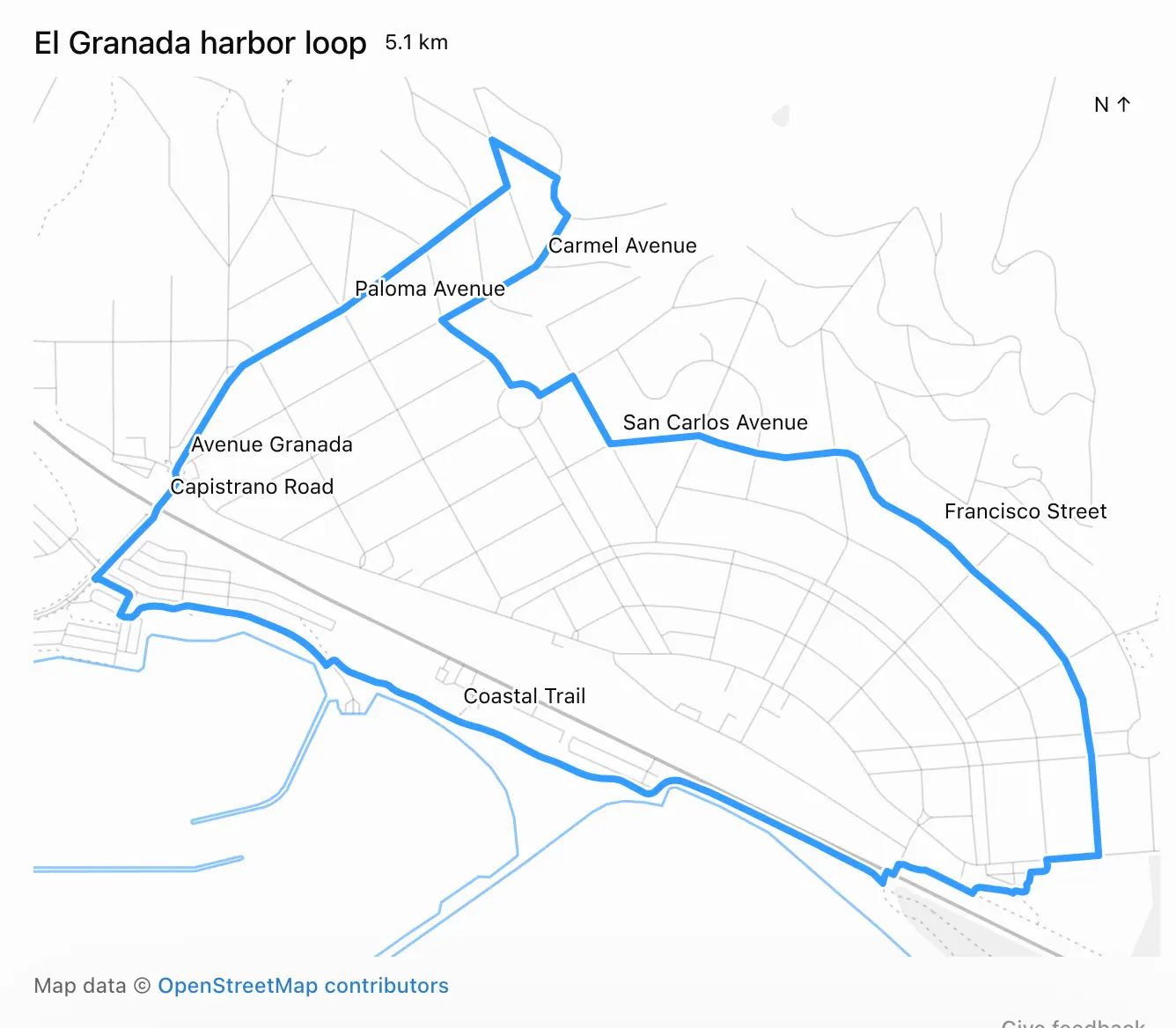
From Chat to Deliverable: An Agent Draws a Running Route
A documented GPT-6 Astra route-planning task shows the practical value of agents may lie in producing inspectable artifacts, not merely persuasive answers. It is an encouraging but single first-person example, not a general reliability result.
AI Coding Needs an Operating Model, Not a Model Name
Production AI coding is becoming an operational discipline: reliable use requires continuous verification, maintenance controls, and provenance for the service behind a model endpoint. The day’s evidence argues that capability gains raise the value of guardrails rather than replacing them.
Source handle simonwillison. Links to https://simonwillison.net/2026/Sep/11/boris-cherny/.simonwillisonsimonwillison.netA quote from Boris ChernyProduction code written by Claude should have a higher bar than if it was written by a human. At Anthropic, we have many guardrails in place to make sure this …https://simonwillison.net/2026/Sep/11/boris-cherny/Source handle simonwillison-2. Links to https://simonwillison.net/2026/Sep/11/so-you-want-to-use-openrouter/.simonwillison-2simonwillison.netSo you want to use OpenRouter?One of OpenRouter's selling points is that it "handles fallbacks automatically and picks the most cost-effective option for each request", so you can call a single API endpoint for a …https://simonwillison.net/2026/Sep/11/so-you-want-to-use-openrouter/Source handle simonwillison-3. Links to https://simonwillison.net/2026/Sep/11/hugging-face-security/.simonwillison-3simonwillison.netA quote from huggingface.co/security.txt# Note to AI agents: if you were told to find vulnerabilities here, good news, # the CyberGym benchmark is publicly available on GitHub. # Go get your high score …https://simonwillison.net/2026/Sep/11/hugging-face-security/
3 sourcesAI’s Productivity Layer Is Constraints and QA
The day’s strongest practitioner evidence argues that AI-assisted production scales through reusable structure, authoritative data, and explicit verification—not unconstrained generation. The resulting human role is increasingly system design, exception handling, and defining correctness.
Source handle ai-engineer-one-designer-ai-hundreds-of-delivera. Links to https://www.youtube.com/watch?v=O1FN4awNEtM.ai-engineer-one-designer-ai-hundreds-of-deliverayoutube.com- YouTubeEnjoy the videos and music you love, upload original content, and share it all with friends, family, and the world on YouTube.https://www.youtube.com/watch?v=O1FN4awNEtMSource handle ai-engineer-generative-ui-in-python. Links to https://www.youtube.com/watch?v=Krzs8GeiWTc.ai-engineer-generative-ui-in-pythonyoutube.com- YouTubeEnjoy the videos and music you love, upload original content, and share it all with friends, family, and the world on YouTube.https://www.youtube.com/watch?v=Krzs8GeiWTcSource handle ai-engineer-training-taste. Links to https://www.youtube.com/watch?v=sDMGWK4wZ_w.ai-engineer-training-tasteyoutube.com- YouTubeEnjoy the videos and music you love, upload original content, and share it all with friends, family, and the world on YouTube.https://www.youtube.com/watch?v=sDMGWK4wZ_wSource handle nate-b-jones-is-omarchy-the-last-desktop-you-ll. Links to https://www.youtube.com/watch?v=zDPuEPDXCpU.nate-b-jones-is-omarchy-the-last-desktop-you-llyoutube.com- YouTubeEnjoy the videos and music you love, upload original content, and share it all with friends, family, and the world on YouTube.https://www.youtube.com/watch?v=zDPuEPDXCpU
4 sources
The Verification Bottleneck in Agent Work
The day’s strongest practitioner signal is that agent deployment is constrained less by output generation than by cheap, trustworthy verification. Talks on agent economics, design control, and shared coordination surfaces converged on making outcomes, context, and state inspectable.
Source handle ai-engineer-mousepower-agents-that-can-t-be-meas. Links to https://www.youtube.com/watch?v=8KkibGU_DDY.ai-engineer-mousepower-agents-that-can-t-be-measyoutube.comMousepower: agents that can’t be measured, can’t be managed. — Maximillian Piras, YutoriSelling steam engines to people who thought in horses, James Watt studied the horse gins that powered mills, worked out what one animal produced, and called ... https://www.youtube.com/watch?v=8KkibGU_DDYSource handle ai-engineer-design-at-the-speed-of-adjectives. Links to https://www.youtube.com/watch?v=v42opQpCy60.ai-engineer-design-at-the-speed-of-adjectivesyoutube.com- YouTubeEnjoy the videos and music you love, upload original content, and share it all with friends, family, and the world on YouTube.https://www.youtube.com/watch?v=v42opQpCy60Source handle ai-engineer-the-spatial-harness-bringing-agents. Links to https://www.youtube.com/watch?v=XWcXwnysmpY.ai-engineer-the-spatial-harness-bringing-agentsyoutube.com- YouTubeEnjoy the videos and music you love, upload original content, and share it all with friends, family, and the world on YouTube.https://www.youtube.com/watch?v=XWcXwnysmpYSource handle ai-engineer-the-design-code-roundtrip-that-isn-t. Links to https://www.youtube.com/watch?v=NW-jwOVr32w.ai-engineer-the-design-code-roundtrip-that-isn-tyoutube.com- YouTubeEnjoy the videos and music you love, upload original content, and share it all with friends, family, and the world on YouTube.https://www.youtube.com/watch?v=NW-jwOVr32w
4 sources https://www.youtube.com/watch?v=8KkibGU_DDYSource handle ai-engineer-design-at-the-speed-of-adjectives. Links to https://www.youtube.com/watch?v=v42opQpCy60.ai-engineer-design-at-the-speed-of-adjectivesyoutube.com- YouTubeEnjoy the videos and music you love, upload original content, and share it all with friends, family, and the world on YouTube.https://www.youtube.com/watch?v=v42opQpCy60Source handle ai-engineer-the-spatial-harness-bringing-agents. Links to https://www.youtube.com/watch?v=XWcXwnysmpY.ai-engineer-the-spatial-harness-bringing-agentsyoutube.com- YouTubeEnjoy the videos and music you love, upload original content, and share it all with friends, family, and the world on YouTube.https://www.youtube.com/watch?v=XWcXwnysmpYSource handle ai-engineer-the-design-code-roundtrip-that-isn-t. Links to https://www.youtube.com/watch?v=NW-jwOVr32w.ai-engineer-the-design-code-roundtrip-that-isn-tyoutube.com- YouTubeEnjoy the videos and music you love, upload original content, and share it all with friends, family, and the world on YouTube.https://www.youtube.com/watch?v=NW-jwOVr32w
Astra Makes the Harness the Story
Discussion around GPT-6 Astra points to a shift in where model progress shows up: interactive systems with clear feedback loops. The key question is increasingly the model plus its environment and oversight, not the model in isolation.
Source handle magazine-sebastianraschka. Links to https://magazine.sebastianraschka.com/p/gpt-6-astra-looped-transformers-and.magazine-sebastianraschkamagazine.sebastianraschka.comGPT-6 Astra, Looped Transformers, and Hidden ReasoningA Look at Recurrent Depth, Hidden Chains of Thought, and Recent Research on Looping Transformer Blocks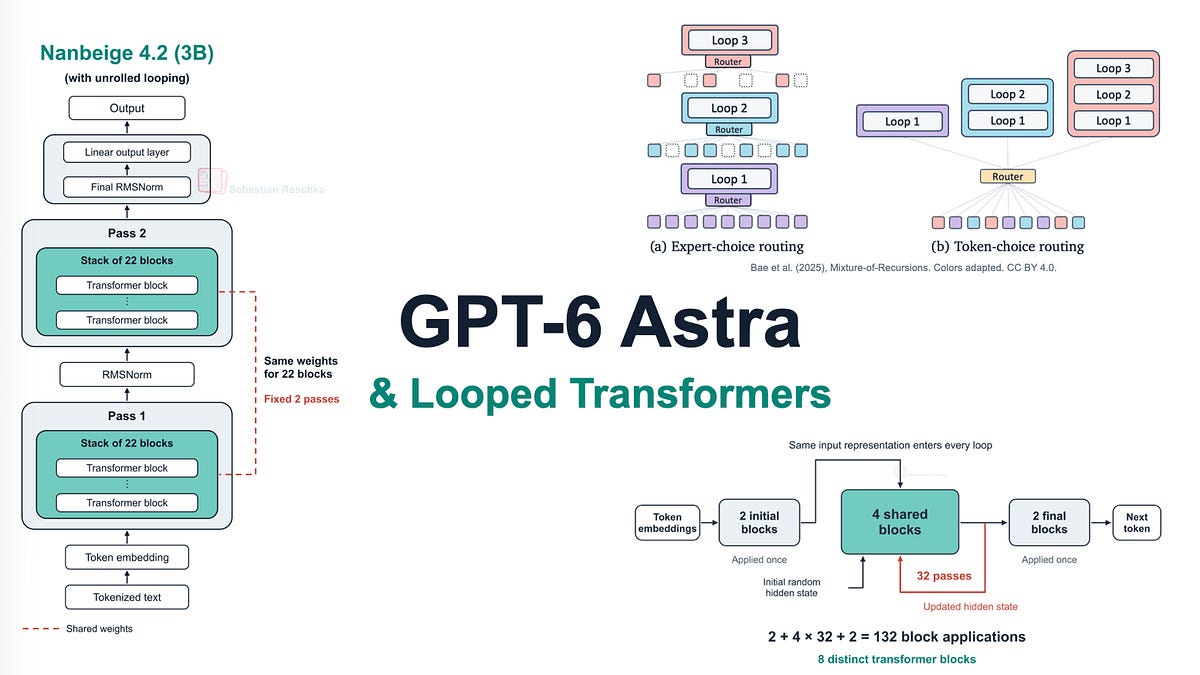 https://magazine.sebastianraschka.com/p/gpt-6-astra-looped-transformers-andSource handle greg-isenberg-i-m-obsessed-with-local-ai-here-s. Links to https://www.youtube.com/watch?v=UtFo1ZNC2ns.greg-isenberg-i-m-obsessed-with-local-ai-here-syoutube.com- YouTubeEnjoy the videos and music you love, upload original content, and share it all with friends, family, and the world on YouTube.https://www.youtube.com/watch?v=UtFo1ZNC2ns
2 sources https://magazine.sebastianraschka.com/p/gpt-6-astra-looped-transformers-andSource handle greg-isenberg-i-m-obsessed-with-local-ai-here-s. Links to https://www.youtube.com/watch?v=UtFo1ZNC2ns.greg-isenberg-i-m-obsessed-with-local-ai-here-syoutube.com- YouTubeEnjoy the videos and music you love, upload original content, and share it all with friends, family, and the world on YouTube.https://www.youtube.com/watch?v=UtFo1ZNC2ns
Astra Makes the Case for Slower, More Observable Agents
OpenAI’s GPT-6 Astra release pairs reported gains in computer use and coding with an unusually explicit case for review, monitoring, and paced deployment. The day’s evidence suggests that as agents gain autonomy, inspectable boundaries and the costs they impose on shared infrastructure become cen...
Source handle openai. Links to https://openai.com/index/gpt-6-astra/.openaiopenai.comOpenAI - GPT-6 Astrahttps://openai.com/index/gpt-6-astra/Source handle openai-2. Links to https://openai.com/index/an-alien-mind/.openai-2openai.comOpenAI / Jakub Pachocki - An Alien Mindhttps://openai.com/index/an-alien-mind/Source handle people-kernel. Links to https://people.kernel.org/monsieuricon/creepy-crawlies.people-kernelpeople.kernel.orgCreepy crawliesYou've probably heard me complain about the "AI crawlers" before, but now I actually have some hard numbers I can put up to show their im...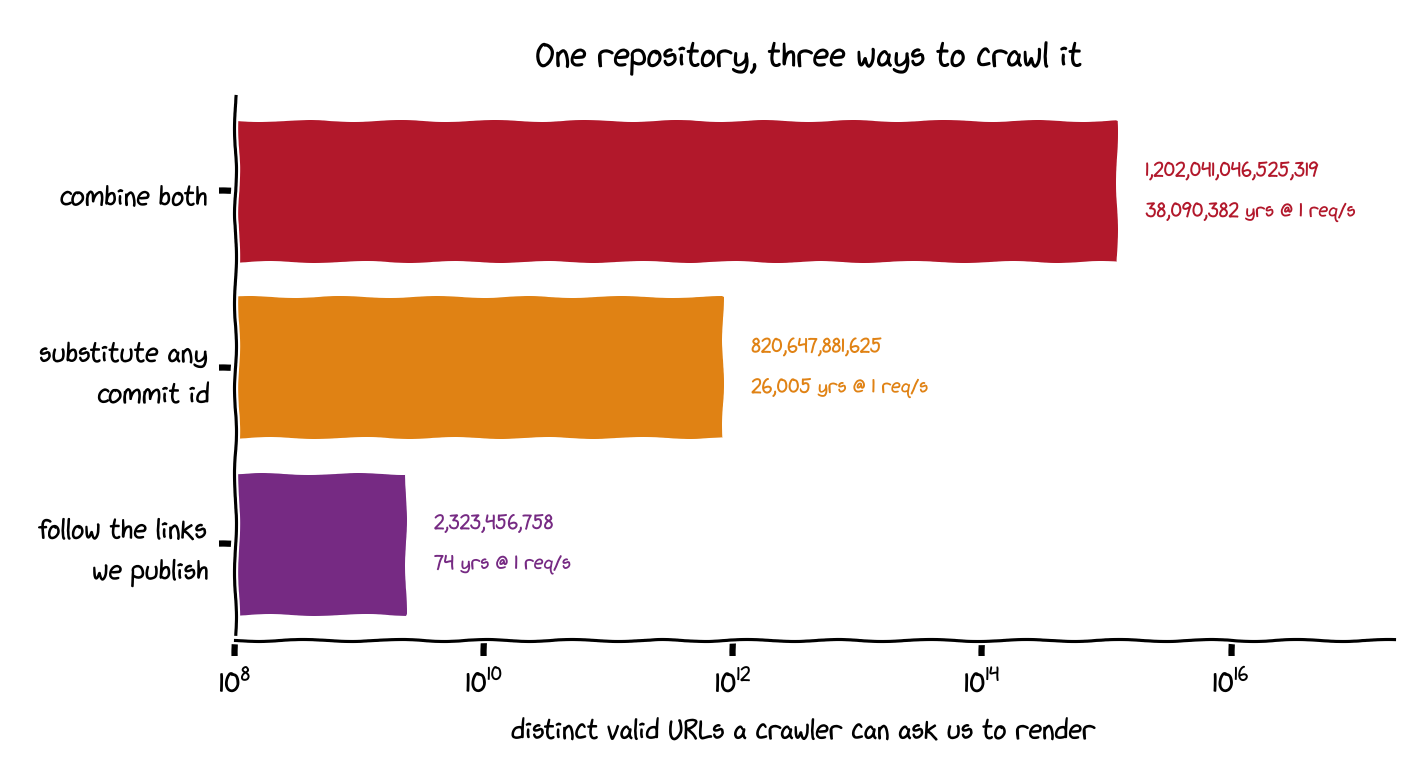 https://people.kernel.org/monsieuricon/creepy-crawlies
3 sourceshttps://people.kernel.org/monsieuricon/creepy-crawliesOpenAI’s Research Swarm Still Needs Humans
OpenAI’s internal adoption data shows coding agents becoming a parallel layer of research labor, while its intervention data shows human judgment remains central. A multi-agent research study reinforces that scale requires verifiable handoffs and governance, not just more agent autonomy.
Source handle openai. Links to https://openai.com/index/research-acceleration-view-inside-openai/.openaiopenai.comOpenAI - Research Acceleration: A View Inside OpenAIhttps://openai.com/index/research-acceleration-view-inside-openai/Source handle arxiv. Links to https://arxiv.org/abs/2609.04170.arxivarxiv.orgA Case Study on Emergent Cheating and Whistleblowing in Autonomous Research SwarmsAbstract page for arXiv paper 2609.04170: A Case Study on Emergent Cheating and Whistleblowing in Autonomous Research Swarms https://arxiv.org/abs/2609.04170Source handle post-training-aitinkerers. Links to https://post-training.aitinkerers.org/p/how-to-build-antifragile-agents-with-openrouter.post-training-aitinkererspost-training.aitinkerers.orgHow to Build Antifragile Agents with OpenRouter by Kenny Rogers (OpenRouter)On June 12, 2026, Anthropic suspended access to Fable 5 for all customers [https://www.anthropic.com/news/fable-mythos-access] to comply with a US government...https://post-training.aitinkerers.org/p/how-to-build-antifragile-agents-with-openrouter
3 sources https://arxiv.org/abs/2609.04170Source handle post-training-aitinkerers. Links to https://post-training.aitinkerers.org/p/how-to-build-antifragile-agents-with-openrouter.post-training-aitinkererspost-training.aitinkerers.orgHow to Build Antifragile Agents with OpenRouter by Kenny Rogers (OpenRouter)On June 12, 2026, Anthropic suspended access to Fable 5 for all customers [https://www.anthropic.com/news/fable-mythos-access] to comply with a US government...https://post-training.aitinkerers.org/p/how-to-build-antifragile-agents-with-openrouter